From custom crimps and threaded fittings to midsection attachment points and end terminations, mechanical assemblies enable wire-based products to meet the needs of complicated applications.
When you're designing a custom mechanical assembly, you define the end uses. We've seen our customers put their designs to work in:
- Articulation devices
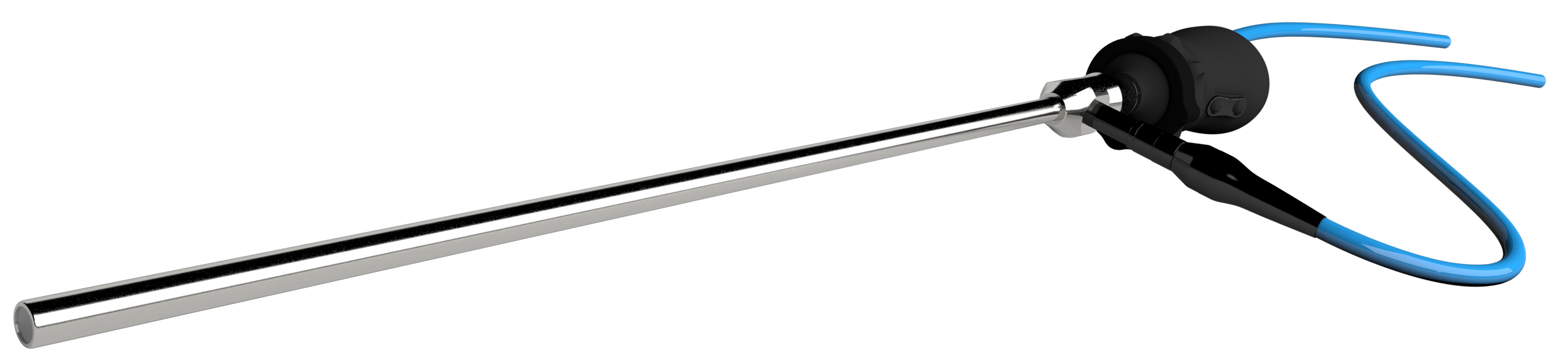
- Laparoscopic or robotic surgery devices
- Minimally invasive surgical instruments
Design specifications
Mechanical assemblies can be as basic as adjusting the ends of cut-to-length strands and cables or as complicated as creating custom terminations and midsection fittings.
When you need HHS® tube, strands, or cables cut to length, we use the following end treatment options to ensure they arrive ready for use.
HHS® tube end treatment options
- Band weld
- Face weld
- Shear cut
- Square cut
Strands and cable end treatment options
If you're trying to find the best strand or cable for your application, you can learn more about different alloys and constructions here. When you need those strands or cables cut to length, we use the following end options to ensure they arrive ready for use.
- Bead and swage
- Beaded
- Encapsulated
- Fused end
- Shear cut
- Square cut
Talk with a technical expert
Mechanical assembly components
To make choosing the right components for your assembly easier, you'll find information about different fittings below to help you prepare for a conversation with our New Product Development engineering teams.
Fittings
|
|
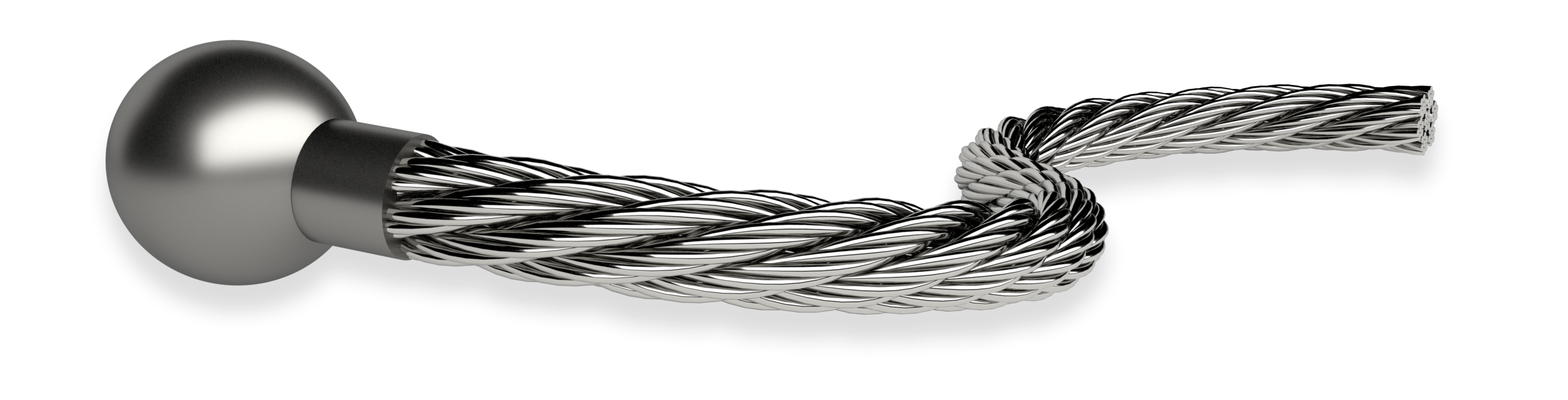
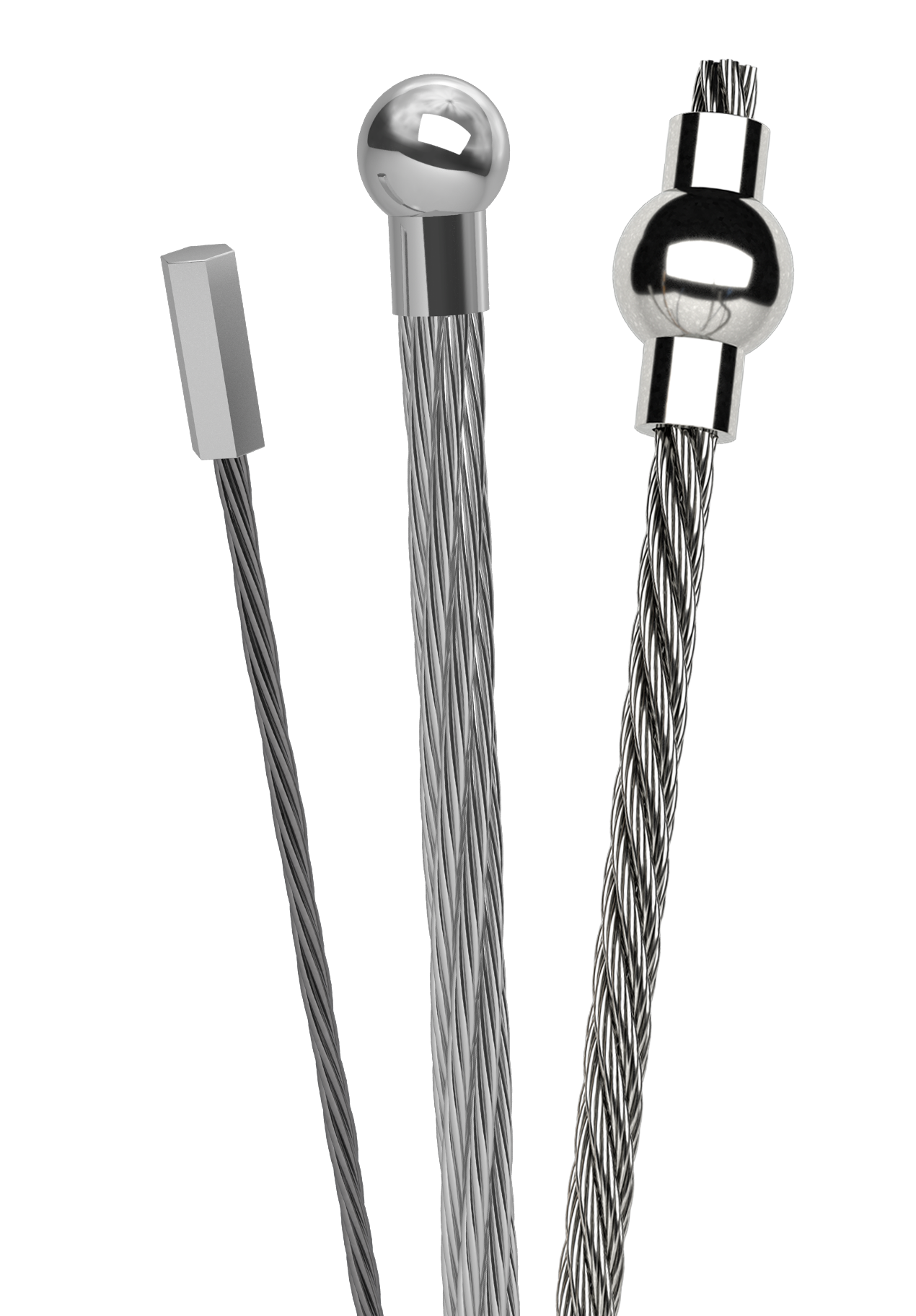
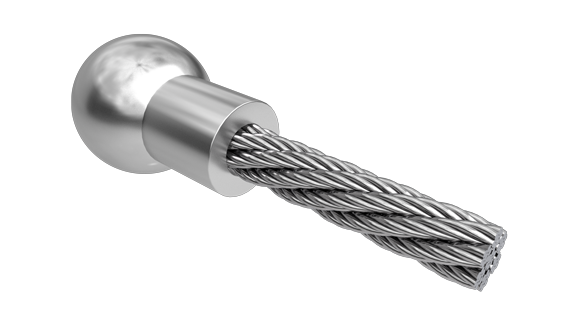
Ball and shank spherical
- Provides full breaking load of cable
- Allows for attachments within a spherical pocket
- Allows cable rotation when load is not significant
- Shank provides abrasion protection
|
 |
Ball spherical
- Provides near-breaking load of cable
- Allows for attachment within a spherical pocket
- Shank provides abrasion protection and higher breaking load
|
|
|
Clevis end
- Manufactured in a fork or eye configuration
- Provides attachment point using a cross pin where push and pull may be needed
|
|
|
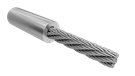
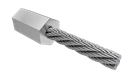
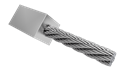
Cylindrical, hexagonal, and square end stop
- Provides attachment points
- Offers customized dimensions
|
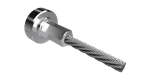 |
Flanged stop
- Beneficial when cylindrical end stop does not provide enough shoulder
- Eliminates need for washer to prevent pull-through
|
|
|
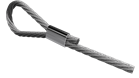
Looped
- Provides attachment point where loop is secured over a pin
|
|
|
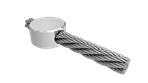
Puck
- Flat top and bottom, resembling a hockey puck
- Tight dimensional tolerances
- Cylindrical sides offer better fit than ball fittings ground to similar geometry
|
|
|
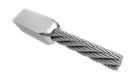
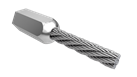
Radiused end stop
- Center with a bore or pocket
- Offers holding strength to near-breaking load of cable
- Allows for cable rotation and positioning
|
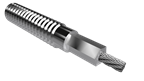 |
Threaded
- Allows for secure attachment and adjustability
- Shank and thread diameter customizable
- Can be used to precisely set tension
- Adjustable to remove cable slack
|
End treatments
|
|
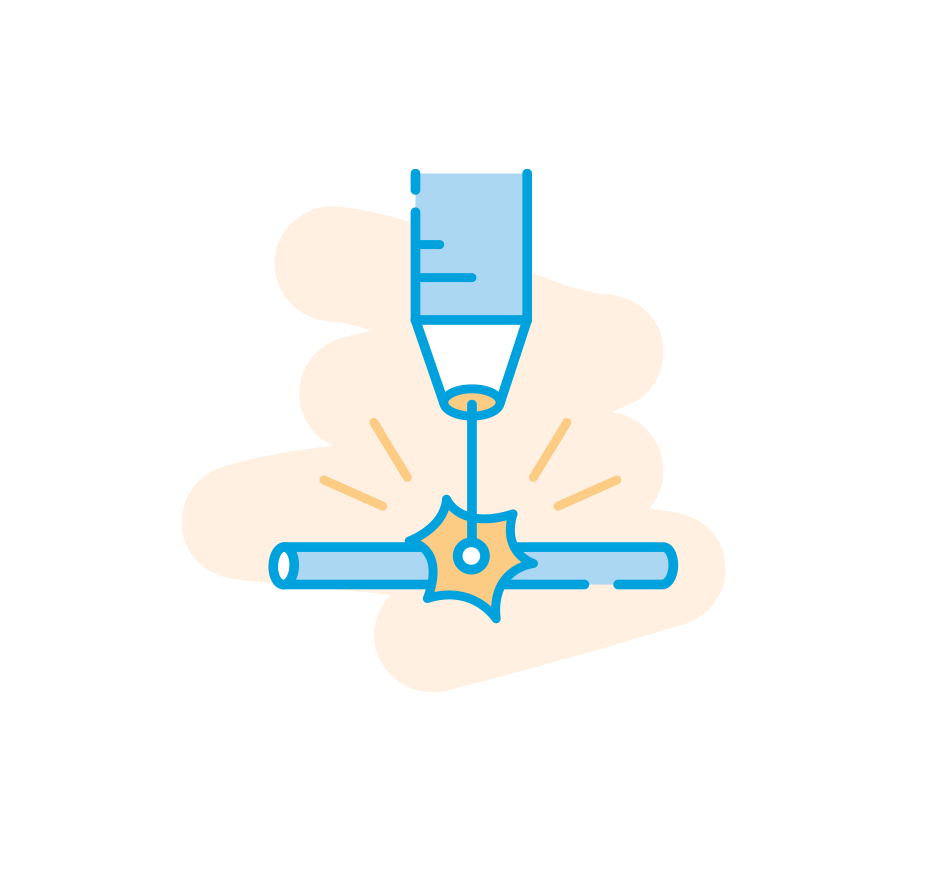
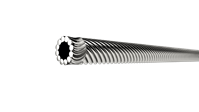
Band weld
- Circumferential laser weld applied to a strand or HHS® tube to join filars together, typically followed by an EDM cut for a square end
- Fuses the outermost layer of filars
- Multi layer constructions may experience layer shift, a face weld may also be recommended
|
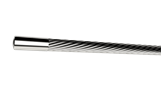 |
Bead & swage
- Filars are joined together and a beaded dimension is produced
- Swaging with press of hammer reduces the bead diameter, producing a solid cylindrical section
|
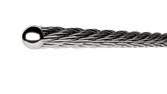 |
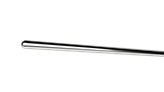
Beaded
- Filars are joined together and a beaded dimension is produced
- Beads are larger than the diameter of the material
|
 |
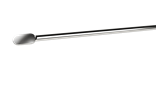
Bullet nose
- Rounded end feature that does not exceed the overall material diameter
|
 |
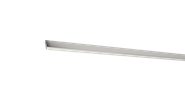
Coining
- Flattening of material to form a flat parallel surface
- May provide a larger surface for coating adhesion, welding, or identifier point
|
 |
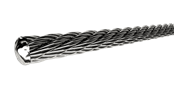
Deburr
- Removal of the sharp edge on the end of a part
- Provides smooth end needed for sliding and reduced friction
|
 |
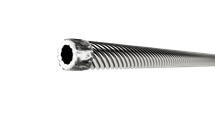
Encapsulated
- All filars are melted together, producing a rounded end
- Individual filars are not visible and treatment prevents fraying
|
 |
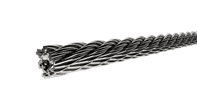
Face weld
- Laser welding applied to the end of HHS® tube to join filars
- Fuses multi layer constructions
- Often used with a band weld to secure all filar layers
|
 |
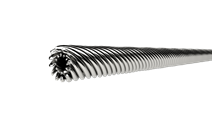
Fused end
- Ends are fused but not encapsulated
- Individual filars may be visible, treatment prevents fraying
|
 |
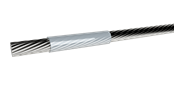
Shear cut
- Produces filars with jagged ends, ideal if ends are removed or are not critical to further processing
- Highly efficient for end termination
|
 |
Shrink tube
- A discrete layer of polymer tube
- Slips over material and when heated, it shrinks
- Provides a surface to electrically or mechanically isolate a point
|
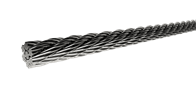 |
Square cut
- Achieved with a wire EDM machine that produces a clean straight cut
- Filars and layers may shift without welding
|
Talk with a technical expert
Additional processing capabilities
Our mechanical assemblies can be further customized with additional processing, such as:
Available in dieletric or lubricious options
Removal of coating from select sections on a wire
Hypodermic tubing
Thin tube to add stiffness and pushability where needed
We use various techniques to improve the surface quality of our material and ensure that our material is free of any visible debris or foreign particulates. For more information on our cleaning processes, please contact your Fort Wayne Metals representative.
Unable to load the form? Click the button below:
Start the conversation